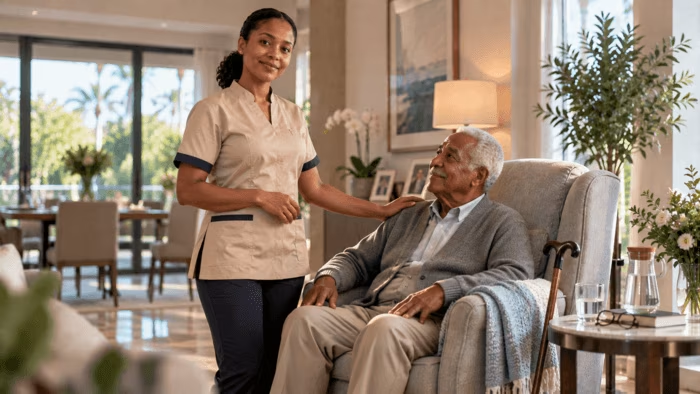
Elderly caregiving is one of Adey Agency’s most carefully screened workforce categories. The role requires more than willingness to help. A suitable candidate needs patience, practical awareness, clear boundaries, and the ability to support another person safely through everyday routines.
For overseas partners comparing elderly caregiver suppliers in Ethiopia, candidate numbers should never be the only measure of availability. Adey maintains a smaller caregiver pool because applicants must show either relevant previous experience or a level of aptitude that can be assessed during structured screening.
Caregiver roles also differ significantly from housekeeping. Partners reviewing our wider Ethiopian workforce categories should therefore define the care requirement separately rather than treating caregiving as an extension of general domestic work.
📌 Note: Adey intentionally applies a more conservative screening standard to caregiver candidates than to most general household roles.
🧭 Start by Defining the Level of Support Required
“Elderly caregiver” can describe very different daily responsibilities.
One person may remain largely independent and need companionship or occasional assistance. Another may require regular help with movement, personal routines, or activities of daily living.
Before sourcing begins, the partner should clarify:
-
The care recipient’s mobility level
-
Level of independence
-
Ability to stand and walk
-
Need for assistance when moving
-
Personal-hygiene support required
-
Daily routines
-
Companionship expectations
-
Fall-risk concerns
-
Communication needs
-
Any relevant non-clinical special requirements
This information helps us determine which candidates have backgrounds or abilities that are relevant to the actual role.
🪜 Care-Level Ladder
Level 1 — Companionship & Routine Support
Suitable where the person remains mostly independent but may need companionship, reminders, light daily assistance, or help maintaining a routine.
Level 2 — Daily-Living Assistance
May include more regular support with dressing, hygiene routines, movement around the home, meals, and other non-medical daily activities.
Level 3 — Mobility-Support Household
Requires greater attention to movement, positioning, safe transfers, fall-prevention awareness, and consistent assistance with everyday routines.
💡 Key Point: The more accurately the care level is described, the more useful the caregiver shortlist becomes.
👥 Understand the Caregiver’s Role Before Selection
A caregiver’s responsibilities may include:
-
Companionship
-
Support with daily routines
-
Basic personal-hygiene assistance
-
Help with dressing
-
Mobility assistance
-
Support during routine movement
-
Meal-related assistance
-
Maintaining a safe daily environment
-
Communicating relevant observations to the family
These responsibilities should not be confused with skilled nursing care.
A household caregiver is not recruited to:
-
Diagnose medical conditions
-
Provide clinical treatment
-
Administer injections
-
Make independent medication decisions
-
Perform skilled nursing procedures
-
Replace licensed healthcare professionals
This distinction is essential when selecting candidates and communicating expectations to families.
🔍 Experience, Aptitude, and Temperament All Matter
Previous caregiving experience is valuable, but suitability involves more than employment history.
Through our candidate sourcing and screening process, Adey considers factors such as prior caregiving exposure, understanding of daily-living assistance, communication style, patience, and response to practical scenarios.
Structured screening may explore:
-
Previous care responsibilities
-
Mobility levels previously supported
-
Personal-care experience
-
Handling of repetitive routines
-
Communication with family members
-
Reactions to stressful situations
-
Respect for role boundaries
-
Understanding of when help should be requested
Candidates without the right temperament may be unsuitable even if they have some relevant experience.
Likewise, enthusiasm alone does not make someone ready for a caregiving position.
Among caregiver suppliers in Ethiopia, careful intake is particularly important because this type of work often involves prolonged close contact with a person who may depend on consistent support.
🛡️ Why Caregiver Screening Is More Conservative
Adey turns away a greater proportion of applicants in this category than in many general household roles.
There is a practical reason for this.
Basic cleaning routines can often be strengthened through instruction and supervised practice. Safe assistance with mobility, personal routines, and vulnerable individuals requires a stronger starting point.
Candidate screening therefore considers:
-
Previous caregiving exposure where available
-
Ability to follow detailed instructions
-
Patience under pressure
-
Communication
-
Respectful behavior
-
Physical awareness
-
Comfort with personal-care responsibilities
-
Understanding of safety boundaries
-
Willingness to escalate concerns appropriately
⚠️ Important: Wanting to care for an elderly person is not the same as being suitable for the role. Practical judgment and temperament matter.
🚶 Mobility Assistance and Daily-Living Support
Mobility support is one of the areas that requires the clearest role definition.
Depending on the household, a caregiver may assist with:
-
Standing and sitting routines
-
Moving safely between areas of the home
-
Basic transfer support
-
Positioning awareness
-
Fall-risk prevention
-
Accessing bathrooms or common areas
-
Maintaining safe surroundings
Preparation may also include basic hygiene assistance and support with regular daily activities.
The objective is safer everyday assistance, not medical treatment.
Caregivers should also understand when a situation is beyond their responsibilities and requires intervention from the family or an appropriate healthcare professional.
📊 Match the Care Requirement to Candidate Evidence
Rather than treating all caregiver profiles as interchangeable, Adey connects the household requirement with evidence from experience, screening, and preparation.
🔗 Care Requirement ↔ Candidate Readiness
| Care Requirement | What Adey Reviews | Readiness Indicator |
|---|---|---|
| Companionship | Temperament and communication | Patience and routine engagement |
| Daily-living support | Experience or assessed aptitude | Understanding of routine assistance |
| Mobility assistance | Experience and preparation | Safer movement-support awareness |
| Hygiene support | Role understanding | Respectful personal-care approach |
| Fall-risk environment | Scenario assessment | Awareness of prevention boundaries |
| Escalation awareness | Interview and preparation | Knows when additional help is needed |
This helps overseas partners understand why a candidate was shortlisted and what aspect of the care requirement she is expected to support.
🗣️ Communication and Escalation Are Part of Good Care
A caregiver does not only perform tasks.
She may notice changes in routine, movement, appetite, behavior, comfort, or the person’s ability to complete normal activities.
Her responsibility is not to diagnose the cause.
Her responsibility is to recognize when something should be reported.
Useful caregiver communication may include:
-
Reporting unusual changes
-
Explaining what happened during the day
-
Informing family members about difficulties
-
Asking for clarification when instructions are unclear
-
Following established family guidance
-
Recognizing when the situation exceeds her role
💡 Good caregiving includes knowing when to assist and when to ask for help.
🌍 Converting the Care Profile into Source-Side Selection
As a foreign employment agency in Ethiopia, Adey needs enough information from the overseas partner to turn the household requirement into practical selection criteria.
A request for “an experienced caregiver” is not specific enough.
A more useful brief identifies:
-
Mobility level
-
Level of independence
-
Daily assistance required
-
Personal-care expectations
-
Communication needs
-
Household environment
-
Previous experience required
-
Working schedule
-
Relevant non-clinical special needs
This allows elderly caregiver suppliers in Ethiopia to search for candidates against a meaningful care profile rather than relying on broad job titles.
🌐 Matching Care Requirements Across Gulf Households
Caregiving requirements can vary greatly between households across Gulf markets.
The layout of the home, availability of family support, working routine, and care recipient’s independence can all affect the role.
For partners recruiting caregivers for Oman and other Gulf destinations, clear information about the household environment helps reduce mismatches before candidate interviews begin.
For example, a caregiver supporting a largely independent elderly person may need strong companionship and routine-management skills.
Another household may place greater emphasis on mobility assistance and personal-care support.
The job title may be the same, but the daily work is not.
🎓 Preparation Before Travel and Starting Work
Suitable caregiver candidates may receive role-related preparation before travel.
Training and orientation can cover areas such as:
-
Safe movement assistance
-
Transfer awareness
-
Positioning
-
Fall-prevention principles
-
Basic personal-hygiene support
-
Communication
-
Maintaining dignity and privacy
-
Workplace boundaries
-
Recognizing situations that require escalation
Where possible, this preparation is delivered by staff with relevant caregiving or nursing-adjacent knowledge.
It is still important to maintain the distinction between caregiver preparation and professional nursing qualifications.
🤝 Adjustment After Arrival Is Part of the Process
The real household routine may differ from what a written job description suggests.
Once a caregiver arrives, both sides need a clear understanding of:
-
Daily responsibilities
-
Personal-care expectations
-
Mobility routines
-
Household boundaries
-
Communication channels
-
Situations that require family involvement
Adey’s post-deployment support can help address early misunderstandings and support clearer adjustment during the initial employment period.
This is particularly important in caregiving because small misunderstandings about responsibilities can affect both the caregiver and the person receiving support.
⏳ Why Caregiver Recruitment Can Take Longer
Caregiver sourcing is usually more selective than general domestic recruitment.
The available pool becomes smaller when a requirement includes factors such as:
-
Previous elderly-care experience
-
Mobility-support experience
-
Strong communication skills
-
Specific language needs
-
Previous Gulf experience
-
Personal-care responsibilities
-
Higher levels of daily assistance
For this reason, larger requests may require more sourcing time.
Reliable caregiver suppliers in Ethiopia should not solve a limited candidate pool by reducing essential suitability checks.
A smaller, stronger shortlist is more useful than a larger group of candidates who do not match the required level of care.
❓ Frequently Asked Questions
-
How do elderly caregiver suppliers in Ethiopia assess candidate suitability?
Assessment may consider previous caregiving experience, structured interviews, temperament, communication, understanding of mobility assistance, personal-care responsibilities, and awareness of when a situation must be escalated.
-
What daily-living support can a caregiver provide?
Depending on the requirement, she may assist with mobility, dressing, hygiene routines, companionship, meals, and other non-medical daily activities.
-
Can partners request caregivers with previous elderly-care experience?
Yes. Previous elderly-care experience can be included as a requirement and considered during sourcing and screening.
-
Are caregiver candidates prepared in safe mobility assistance?
Preparation may cover safer movement support, positioning, transfer awareness, and fall prevention. The exact level depends on the role and candidate background.
-
What information should be included in the caregiver requirement?
Partners should specify mobility level, independence, daily support needs, personal-care requirements, working routine, communication expectations, destination, and any relevant non-clinical special needs.
-
Are caregivers a substitute for nurses or medical professionals?
No. Caregivers provide daily-living and non-medical support. They should not be recruited to perform skilled nursing treatment, clinical procedures, or independent medical decision-making.
-
Why can caregiver recruitment take longer than general household staffing?
The candidate pool is smaller because suitability standards are stricter. Experience, temperament, mobility-support awareness, and the care recipient’s actual needs can all narrow the available shortlist.
📩 Request Elderly Caregiver Candidates
If you are evaluating caregiver suppliers in Ethiopia, send Adey Agency the number of candidates required, care recipient’s mobility level, daily-living support needs, preferred experience, communication requirements, destination, and relevant non-clinical care details.
We will use that information to identify caregiver candidates whose experience, temperament, and readiness align with the required level of support.
Contact Adey Agency to start your caregiver workforce request.